Key takeaways
- WA mining is pressure-tested: shutdown windows, FIFO schedules, personnel turnover, and contractor interfaces shape decisions.
- Leadership is a safety control: leader response determines reporting flow and learning quality.
- Signals beat slogans: weak signals surface earlier when people feel safe to speak up.
- Pressure reveals defaults: in “red” time (high-pressure, survival-mode conditions), leaders buy information before buying action.
- Training must be behavioural: practice real scenarios, and reinforce it with coaching and reflection.
- No visible change has a cost: silence leads to disengagement when concerns are not addressed.
Why WA Mining Companies Are Switching to Safety Leadership Training
WA mining doesn’t fail because leaders “don’t care about safety.” It fails when the plan meets pressure and leaders default to behaviours that degrade reporting and learning. The challenge isn’t knowledge; it is leaders enacting effective behavior under pressure.
In WA operations, the pressure is constant and predictable:
- Shutdown windows compress decisions and amplify consequence
- Staff turnover and FIFO schedules disrupt shared context and inhibit weak-signal identification
- Competing priorities across production, maintenance, safety and compliance create static
This is why more mining companies are investing in safety leadership training that is designed for real operational moments. When leadership behaviour improves, reporting quality improves. When reporting quality improves, decision quality improves. When decision quality improves, operational risk drops.
HOP in Mining Is Practical, Not Philosophical
Human and Organisational Performance (HOP) is useful because it changes what leaders do in the moment. It shifts the question from “Who failed?” to “What system drivers made this outcome possible” [1]
If you want a primer on the foundations of HOP start here: Human and Organisational Performance: The 5 Principles of HOP. If you want the practical bridge from blame to learning, this is the companion: Moving Beyond the Blame Game in High-Risk Industries. [2]
HOP doesn’t remove standards; it improves understanding. That shift upgrades learning quality, decision quality, and reporting quality on site.
“If leaders only get truth when it’s safe and tidy, they don’t get truth when it matters.”
HOP reframes “error” as information about conditions, trade-offs, and system design.
Leadership is a Safety Control (and HSE Teams enable it)
“Leadership is a safety control” lands because it is operationally true.
In the hierarchy of controls, engineering and isolation controls reduce risk. Administrative controls shape how work is planned and executed. Leadership response sits upstream of both: it determines whether people report early, whether learning happens, and whether administrative controls get stronger or weaker over time. [3]
If a supervisor reacts with threat or sarcasm people stop reporting weak signals. If leaders respond with curiosity and seek to understand the concerns of their staff whilst, at the same time interrogating the context, weak signals will be reported freely, understood quicker, and the operational ramifications will become clearer.
Weak Signals are Where Incidents Start (and Where Strong Leaders Win)
The “signals” framing matters because most serious outcomes begin as small, ignorable data.
A weak signal looks like:
- A higher than expected vibration on a piece of machinery
- A small parameter drift on a pump that keeps getting normalised because “it’s still within range”
- Out of date slinging equipment that is replaced, but not reported
These are not technical mysteries. They are communication and decision-making moments. When weak signals don’t flow, the system learns late and pays with higher consequences.
Why People Don’t Speak Up: Psychological Safety and SCARF
Psychological safety isn’t soft. It’s signal flow.
When a person anticipates a social threat, the brain will go into survival mode protecting the person before “the system”. The SCARF model is a useful way to name the common social domains which will trigger a survival response if breached: Status, Certainty, Autonomy, Relatedness, Fairness. When leaders unintentionally threaten one of these, people go quiet. [4]
Leaders don’t need therapy language; they need the mindset that will reduce social threat so information can flow.
“Protect the person, interrogate the context.”
This keeps standards high while making it safe to surface early concerns.
Pressure is the Real Test
The production–safety tension is normal. It’s not evidence of failure. It’s the operating environment.
Under pressure, leaders are often operating with:
- Compressed timeframes
- Incomplete or conflicting information
- Competing demands across production, maintenance, and HSE
- High visibility and scrutiny during critical work
In these moments, speed feels like safety. It isn’t. Clarity is. Under time pressure, people rely more on fast pattern-matching and less on deliberate reasoning. [5]
The behaviour shift that matters most is straightforward: in “red” [6] time, leaders buy information before buying action.
Note: In his book Perform Under Pressure [6] Dr Ceri Evans developed the Red-Blue mind model, to assist in conceptualising the brain’s fast, emotional, survival- oriented system (Red) and the brain’s logical and reflective system (Blue). Neither is bad, the challenge is ensuring that Red and Blue are balanced when we are put under pressure. Similar in structure to Kahneman [5], who’s focus was on cognitive science and how humans make predictable errors in judgments and decisions (biases), Evans’ focus is on performance psychology and how humans perform under pressure (how we can regulate our emotions in high-stakes environments).
A Short WA-Style Vignette: Signals, Response, Learning, Control
A supervisor registers a slight concern before a critical lift when asking the team leader how things are looking prior to the commencement of work. The concerning response from the team leader was: “It was a pretty ordinary handover…” In the past, that might have triggered annoyance or a push to “just get moving.”
Instead, the leader reduces psychological threat and buys information: “Walk me through the handover, what was ordinary about it, and what would have made it better?”
The team leader had identified a small mismatch in roles between the contractor and site personnel. They pause, reset responsibilities, run a two-minute check, and adjust the brief for the remainder of the job. No drama. No blame. A small administrative control change that prevents confusion in the next lift.
The key point: if nothing visibly changes after someone speaks up, reporting degrades. People learn fast whether raising signals is worth it.
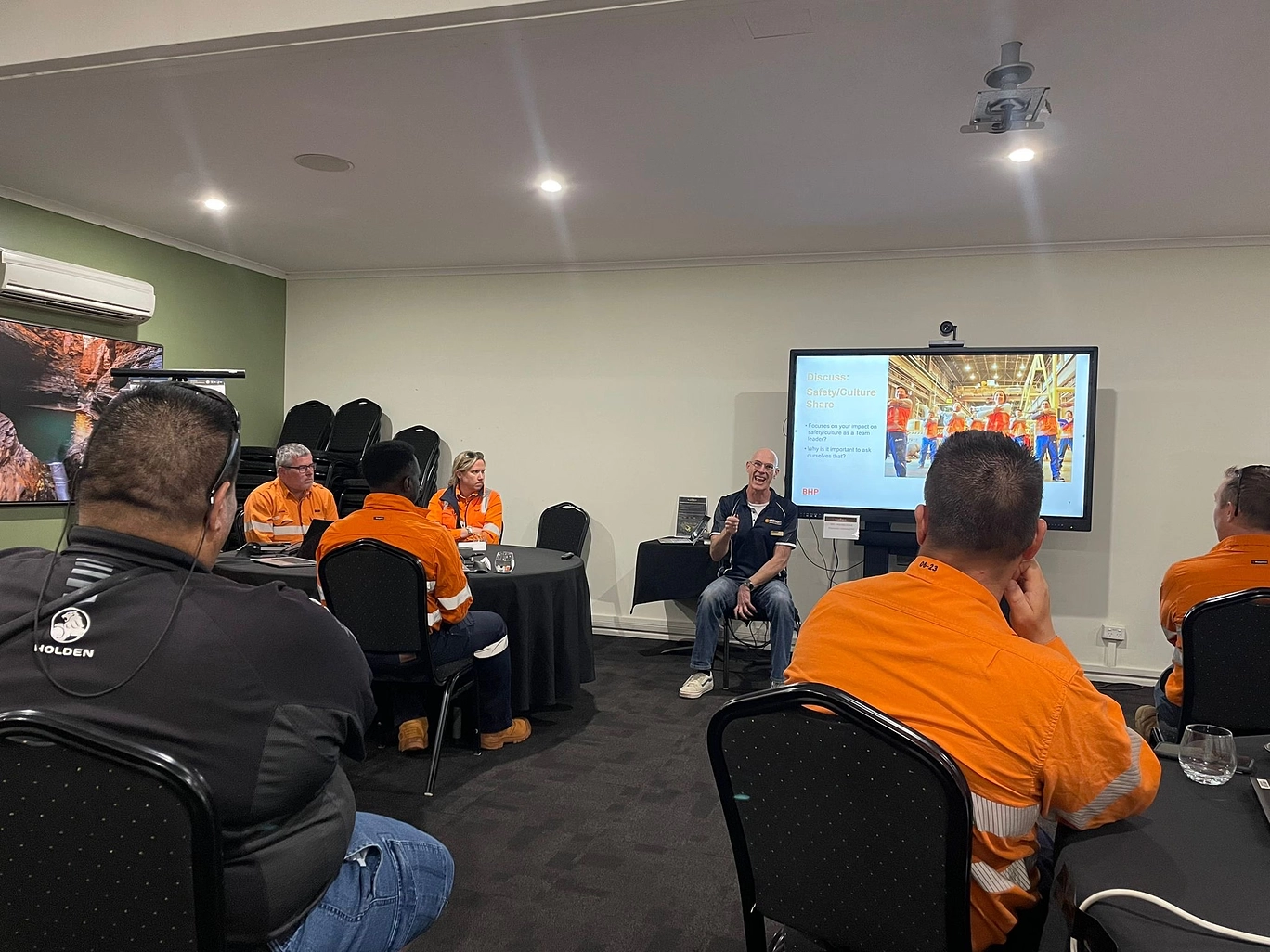
What Safety Leadership Training Needs to Teach (to Work on Site)
If training stays conceptual, it won’t survive shutdown pressure, fatigue, and competing demands.
A road map for behavioral change addresses the following:
- Context-first questioning: “Walk me through your thought process on this.”
- Threat-aware response: reduce / remove SCARF triggers so information keeps flowing.
- Decision discipline under uncertainty: buy information, slow the moment and then act.
- Learning reviews that don’t blame: protect the person, interrogate the context, and strengthen controls.
- Visible follow-through: close the loop so reporting stays alive.
Done properly, measurable shifts can include faster decision cycles, visible ownership, and reduced operational risk when leaders model psychologically safe behaviours. (This is not illusory. It’s what happens when signals move without fear of repercussion and learning becomes routine.)
How Coaching Reinforces Change (So it Doesn’t Fade)
Workshops create the first behaviour change. Coaching makes it durable.
The mechanism is a cadence: Brief → Execute→ Debrief & Coach, with coached reflection. Leaders practice on real scenarios, apply it on shift, then debrief what changed, what was problematic, and are coached on what to adjust next time. [7]
This turns “training” into a system instead of a one-off event.
Participant Feedback (What Good Looks Like)
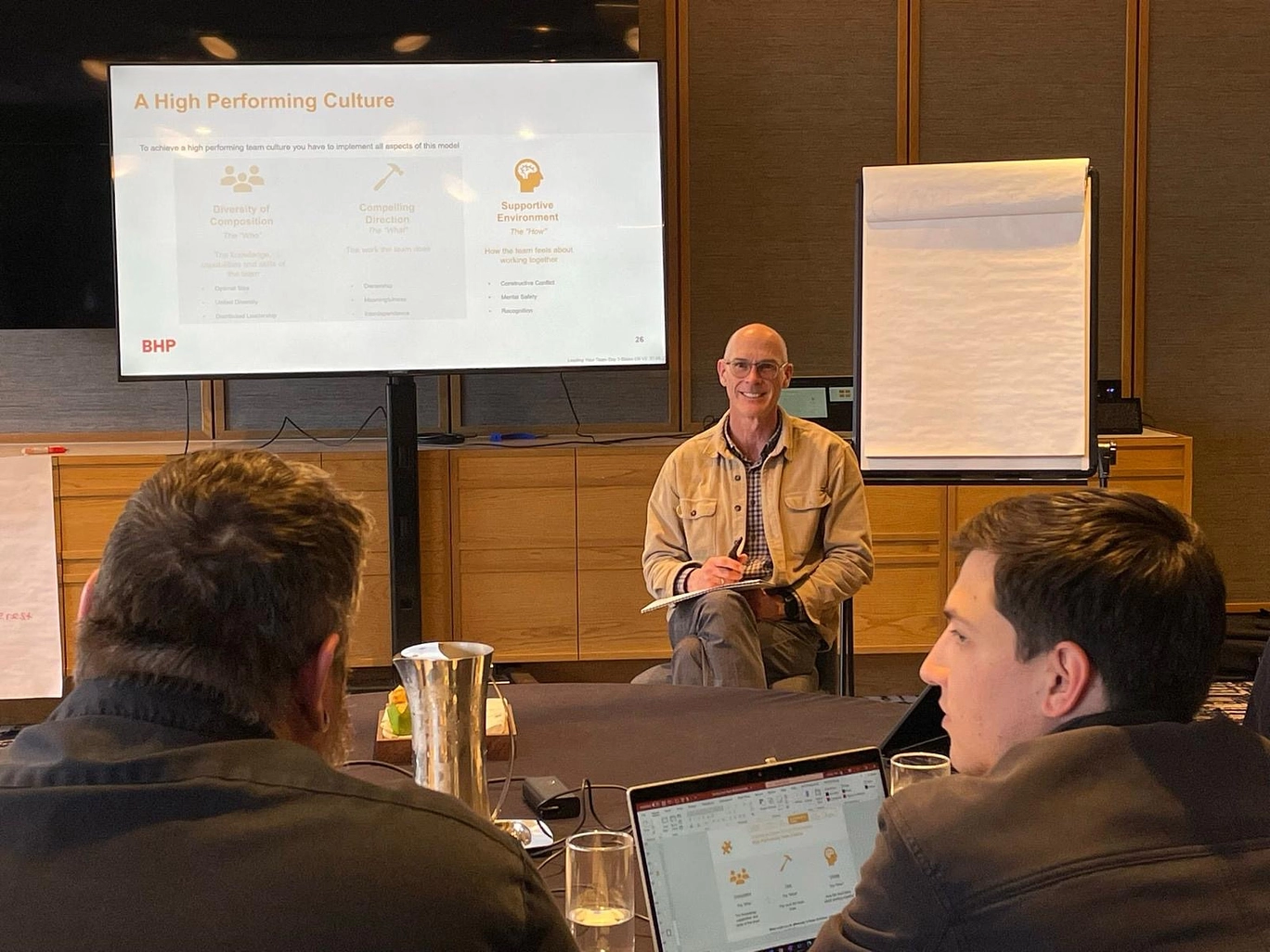
This message, sent from a senior mining mining executive, signals the training landed where it matters: in the felt experience.
“Hi Chandler Thanks for the opportunity to attend. I feel privileged to be invited.
Great work by yourselves, fantastic investment in our leaders.
Folks said it was the best leadership training they have attended and that they were thoroughly enjoying it. Very high praise. Well done.
Look forward to being involved in future sessions. Thanks again and take care.”
What WA Mining Leaders Can Do Immediately
If you want immediate lift without a full program, you can:
- Make it safe to report: value early concerns and be explicit about what will happen next.
- Run a short learning review on normal work, not just incidents: Capture what made success possible as well as what could have caused issues. Error exists in success as well as failure.
- Practice “red” time behaviour management: buy information before buying action.
Pressure-Tested Formats That Match WA Reality
If you’re ready to build this capability for your mine site, these delivery formats are available:
- Full-day scenario practice with peer coaching (leadership response under pressure)
- Multi-day delivery with follow-up (Brief –> Execute–> Debrief & Coach cadence for sustained change)
For WA delivery and formats, start here: Safety Leadership Training.
Sources & Notes
- HOP principles (primer): Chandler Comerford, Human and Organisational Performance: The 5 Principles of HOP. Source.
- Blame to learning (practical explainer): Chandler Comerford, Moving Beyond the Blame Game in High-Risk Industries. Source.
- Leadership behaviour as a control mechanism: framing aligns with administrative controls strengthening through reporting and learning loops.
- SCARF model (social threat and behaviour): NeuroLeadership Institute, SCARF Model Overview, Brain Based Conversation Skills (TM) Participant Workbook.
- ‘Decision-making under uncertainty’: Kahneman, D. (2011). Thinking, Fast and Slow. Penguin source
- ‘Perform Under Pressure: Change the Way You Feel, Think and Act Under Pressure.’: Ceri Evans (2020). source
- Coaching and feedback mechanisms: NeuroLeadership Institute research on feedback and coached reflection.
• West, T. V., Thorson, K., Grant, H., & Rock, D. (2018). Asked for vs unasked for feedback. NeuroLeadership Journal, 7.• Dixon, P., Rock, D., & Ochsner, K. (2010). Turn the 360 around. NeuroLeadership Journal, 3.